Pull the syringe to:
(0.100ml)
Concentration: 5.00 mg/ml
Doses per vial: 30
This calculator is provided as a reference tool for research purposes only. Always follow your institution’s safety protocols when handling research compounds.
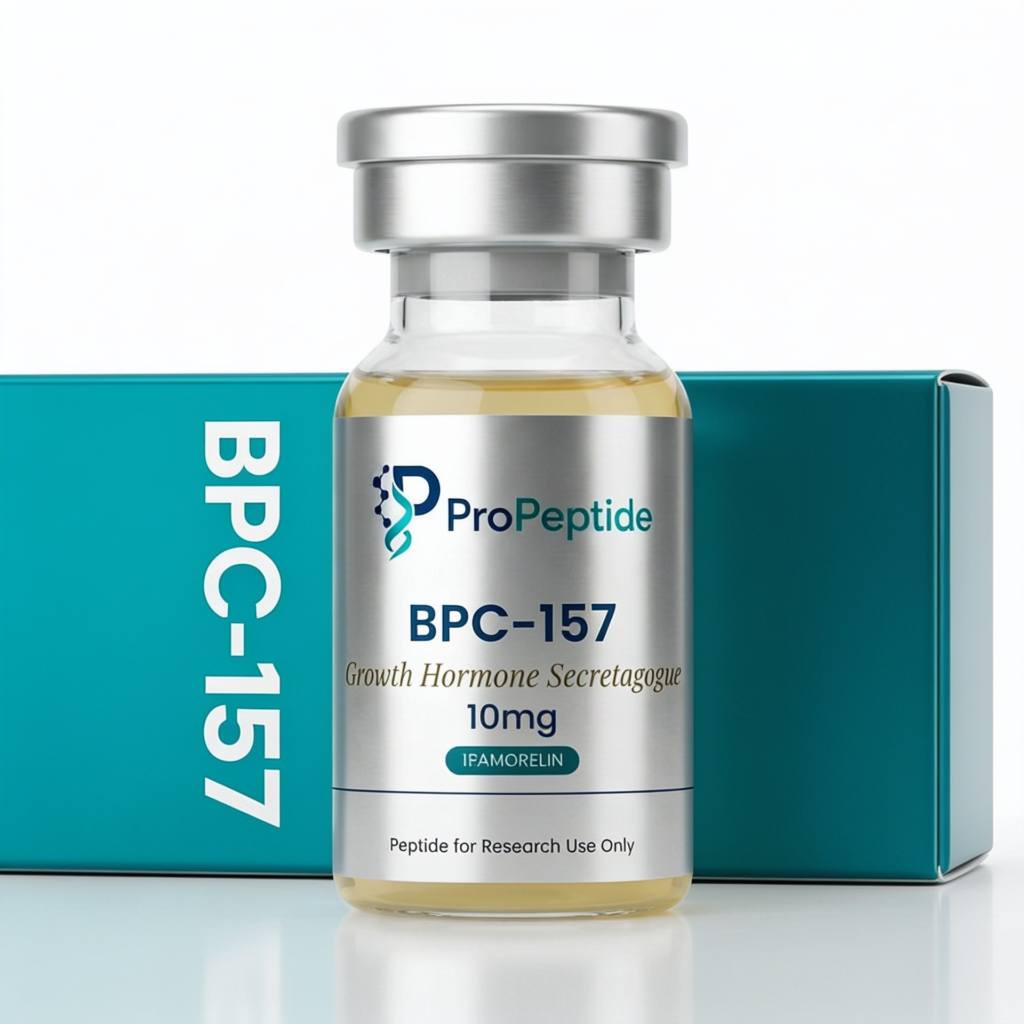
BPC-157 10mg is a synthetic research peptide studied in relation to gastric pentadecapeptide research, cytoprotection models, angiogenesis pathway research, nitric oxide pathway models, soft tissue research and gastrointestinal pathway research.
BPC-157 is commonly described in research literature as a stable gastric pentadecapeptide. PubChem lists BPC-157 with the molecular formula C62H98N16O22 and molecular weight of approximately 1419.5 g/mol.
This product is supplied for laboratory research use only. It is not a medicine, supplement, injury recovery product, wound-healing product, gut health product, performance product or injectable product for human use.
| Product Detail | Information |
|---|---|
| Product name | BPC-157 |
| Common research names | BPC 157, Bepecin, Body Protection Compound 157 |
| Size | 10mg |
| Product type | Research peptide |
| Research category | Tissue Repair Research / Gastrointestinal Research |
| Common research interest | Cytoprotection, angiogenesis, nitric oxide, soft tissue and gastrointestinal pathway research |
| Peptide type | Synthetic pentadecapeptide |
| Peptide length | 15 amino acids |
| Molecular formula | C62H98N16O22 |
| Molecular weight | Approximately 1419.5 g/mol |
| Form | Lyophilised powder |
| Intended use | Laboratory research only |
| Human use | Not for human consumption, administration, recovery, injury treatment or injection |
| Documentation | Certificate of Analysis should be checked before use |
| Component | Research Class | General Research Role |
| BPC-157 | Synthetic pentadecapeptide | Studied in relation to cytoprotection and tissue-repair pathway research |
| Gastric peptide context | Stable gastric pentadecapeptide research | Commonly discussed in gastrointestinal and cytoprotection research |
| 15-amino-acid peptide structure | Short peptide chain | Used in research models involving angiogenesis, nitric oxide and tissue response |
| Molecular formula | C62H98N16O22 | Listed in PubChem for BPC-157 |
| Molecular weight | Approximately 1419.5 g/mol | Useful for laboratory concentration and molar calculation planning |
| Lyophilised peptide preparation | Freeze-dried peptide format | Supports stability before reconstitution when stored correctly |
Product identity, sequence, purity, salt form and batch information should always be confirmed through supplier documentation and the Certificate of Analysis. Researchers should not rely on product name alone when confirming peptide identity.
BPC-157 is studied as a stable gastric pentadecapeptide with research interest around cytoprotection, nitric oxide pathway interaction, angiogenesis, collagen-related tissue models and gastrointestinal pathway research.
A review article in PubMed Central describes stable gastric pentadecapeptide BPC-157 in relation to Robert’s stomach cytoprotection and adaptive cytoprotection concepts. This literature context is research-based and should not be used as a claim that a research-use BPC-157 vial treats, heals or prevents any human condition.
BPC-157 is also widely discussed in sports and recovery spaces online, but that consumer framing is not suitable for a research-use product page. In 2026, the WADA Prohibited List includes BPC-157 under the S0 unapproved substances category, which is relevant context for avoiding athlete, recovery or performance claims.
| Research Area | BPC-157 |
| Main research category | Gastric pentadecapeptide research |
| Common name | Body Protection Compound 157 |
| Peptide length | 15 amino acids |
| Pathway interest | Cytoprotection, angiogenesis and nitric oxide pathway research |
| Tissue research interest | Tendon, ligament, muscle, wound and soft tissue pathway models |
| Gastrointestinal research interest | Gastric mucosa, ulcer-related and gut barrier pathway models |
| Evidence limitation | Mostly laboratory, animal and preclinical research contexts |
| Product limitation | Research use only, not approved for human use |
| Feature | BPC-157 | TB-500 |
| Research class | Stable gastric pentadecapeptide | Thymosin beta-4 fragment research peptide |
| Main research focus | Cytoprotection, angiogenesis and tissue-response pathway research | Actin binding, cell migration and tissue-remodelling pathway research |
| Peptide length | 15 amino acids | Larger peptide fragment |
| Common research overlap | Soft tissue, tendon, wound and repair pathway models | Soft tissue, cell migration and regeneration pathway models |
| Common SEO risk | Being marketed as injury recovery or healing peptide | Being marketed as recovery or repair peptide |
| Safer positioning | Tissue-repair pathway research peptide | Cell migration and tissue-remodelling research peptide |
| Human-use claim | Not appropriate for research-use products | Not appropriate for research-use products |
| Feature | BPC-157 | KPV |
| Research class | Stable gastric pentadecapeptide | Tripeptide fragment research compound |
| Main research focus | Cytoprotection, angiogenesis, nitric oxide and tissue-response research | Inflammatory pathway and immune-signalling research |
| Gastrointestinal research relevance | Commonly discussed in gastric and gut pathway research | Commonly discussed in inflammatory and barrier-function research |
| Product positioning | Tissue-repair and gastric peptide research | Inflammatory pathway research peptide |
| Common SEO risk | Healing, recovery and injury claims | Gut healing and anti-inflammatory claims |
| Human-use claim | Not appropriate | Not appropriate |
| Strength | Product Page Positioning |
| BPC-157 5mg | Lower-strength research vial for protocol-specific concentration planning |
| BPC-157 10mg | Standard research vial for laboratory tissue-response and gastric peptide pathway research |
| BPC-157 20mg | Higher-strength research vial for larger protocol-specific concentration planning |
BPC-157 strengths should be treated as product variants, not duplicate product pages. If multiple strengths are listed separately, each page should have a strength-specific title, meta description, slug, concentration table and internal links to reduce SEO cannibalisation.
| Common Online Claim | Safer Research-Use Wording |
| Injury recovery | Studied in soft tissue and tissue-response pathway research models |
| Tendon healing | Studied in tendon and collagen-related preclinical models |
| Gut healing | Better framed as gastric mucosa and gastrointestinal pathway research |
| Pain relief | Not an approved or appropriate product claim |
| Faster recovery | Not an approved or appropriate product claim |
| Anti-inflammatory support | Better framed as inflammatory pathway research |
| Wound healing | Studied in wound-response research models, not a human-use claim |
| Performance enhancement | Not an approved or appropriate product claim |
BPC-157 10mg is not intended to diagnose, treat, cure or prevent any disease. It is not supplied for injury recovery, tendon repair, ligament repair, wound healing, gut health, pain relief, inflammation, recovery, bodybuilding, anti-ageing, sports performance, tissue repair, general wellness or therapeutic use.
All information on this page is provided for laboratory research and product handling context only.
There is no universal recommended dilution for BPC-157 10mg. Dilution depends on the research protocol, required working concentration, assay design, solvent compatibility, storage method and validated laboratory procedure.
For research concentration planning only, the basic formula is:
Total peptide amount divided by diluent volume equals final concentration.
| Diluent Added to 10mg Vial | Final Concentration |
| 1mL | 10mg/mL |
| 2mL | 5mg/mL |
| 2.5mL | 4mg/mL |
| 3mL | 3.33mg/mL |
| 4mL | 2.5mg/mL |
| 5mL | 2mg/mL |
| 10mL | 1mg/mL |
These are research concentration examples only. They are not human dosing instructions and must not be used to calculate injection quantities.
Before handling BPC-157 10mg in a laboratory setting, make sure all materials, documentation and clean handling conditions are prepared.
| Item | Purpose |
| Product vial | Contains lyophilised BPC-157 peptide |
| Certificate of Analysis | Confirms batch-level testing information |
| Suitable research-grade diluent | Used to prepare a working research solution |
| Sterile lab consumables | Helps reduce contamination risk |
| Personal protective equipment | Gloves, lab coat and eye protection |
| Alcohol wipes or approved disinfectant | Used for surface and vial-top preparation |
| Laboratory labels | Records concentration, date, batch and handler details |
| Cold storage access | Supports correct storage after preparation |
| Disposal container | Used for compliant laboratory waste disposal |
The following is a general laboratory handling framework only. Always follow the product Certificate of Analysis, supplier documentation, SDS, institutional procedures and validated research protocol.
Check the product label, batch number, Certificate of Analysis and storage requirements before handling the vial.
Use a clean laboratory workspace. Wear appropriate PPE and disinfect the bench surface, vial top and any required equipment.
If the vial has been stored cold, allow it to equilibrate according to laboratory procedure before opening or reconstitution. Avoid condensation entering the vial.
Add the selected research-grade diluent slowly down the inside wall of the vial. Avoid forceful spraying directly onto the lyophilised powder.
Gently swirl or roll the vial until the powder is dissolved. Avoid aggressive shaking, unnecessary vortexing or foaming unless a validated protocol specifically allows it.
Check the solution for cloudiness, visible particles, unusual colour changes or undissolved material. If anything appears abnormal, quarantine the vial and check supplier documentation.
Label the vial or aliquots with the product name, concentration, diluent used, date prepared, batch number and researcher initials.
Place the reconstituted solution into the required storage condition as soon as possible. Avoid unnecessary warming, cooling or repeated freeze-thaw cycles.
Some lyophilised peptide products may take time to fully hydrate. Dissolution should always be handled gently and according to laboratory protocol.
| Issue | What It May Indicate | Safer Response |
| Powder clinging to vial wall | Static or lyophilisation residue | Allow more contact time with diluent |
| Small particles remain | Incomplete hydration | Continue gentle swirling |
| Cloudy solution | Possible incompatibility or contamination | Stop and check documentation |
| Foaming | Too much agitation | Let the solution settle and avoid shaking |
| Colour change | Possible degradation or contamination | Do not continue without supplier guidance |
| Storage Factor | Guidance |
| Product form | Lyophilised powder |
| Storage condition | Follow supplier label and Certificate of Analysis |
| Light exposure | Protect from unnecessary light exposure |
| Moisture exposure | Keep sealed until use |
| Temperature changes | Avoid repeated temperature cycling |
| Handling | Minimise unnecessary opening or vial puncture |
| Storage Factor | Guidance |
| Storage condition | Follow validated research protocol |
| Labelling | Record concentration, date, diluent and batch number |
| Freeze-thaw cycles | Avoid repeated freeze-thaw exposure |
| Aliquoting | Use small research aliquots where appropriate |
| Contamination control | Use clean laboratory technique |
| Light exposure | Protect from unnecessary light exposure where required |
| Disposal | Dispose according to laboratory waste procedures |
Peptides may be sensitive to temperature, light, pH, agitation and contamination. Storage conditions should be confirmed through supplier documentation or the laboratory’s validated method.
This page does not provide human dosing, injection instructions, injection schedules or administration guidance.
BPC-157 10mg is not supplied for human or animal administration. It is a laboratory research-use product only.
For research settings, any measured aliquots should be prepared according to the concentration required by the approved research protocol. All calculations should be checked, documented and traceable.
| Planning Item | What to Record |
| Final concentration | Total peptide amount and diluent volume |
| Working solution | Concentration used in the research protocol |
| Aliquot volume | Volume transferred into each labelled lab tube |
| Batch details | Product batch, CoA and preparation date |
| Sequence confirmation | Confirmed BPC-157 sequence from CoA or supplier documentation |
| Storage location | Fridge, freezer or other controlled storage area |
| Handler details | Researcher name or initials |
| Preparation date | Date and time of reconstitution |
| Disposal date | When the aliquot should no longer be used |
| Strength check | Confirmation that the 10mg vial strength matches the approved research protocol |
Correct handling is important for research consistency, contamination control and product traceability. Most mistakes occur when products are not labelled clearly, concentration calculations are not recorded or storage conditions are not followed.
Because BPC-157 is commonly discussed online in relation to injury recovery, tendon repair, gut health and sports performance, product pages should avoid wording that could be interpreted as encouraging human self-use, injection, treatment use or athlete use.
WADA lists BPC-157 under prohibited unapproved substances for sport, so any athlete, performance or recovery positioning should be avoided entirely on a compliant research-use page.
| Always | Why It Matters |
| Check the Certificate of Analysis | Confirms batch-level information |
| Confirm peptide identity | Helps verify product accuracy |
| Use PPE | Reduces contamination and exposure risk |
| Label every vial and aliquot | Prevents mix-ups |
| Record concentration calculations | Supports traceability |
| Use clean laboratory technique | Reduces contamination risk |
| Follow institutional protocols | Keeps handling consistent and auditable |
| Store according to documentation | Helps protect peptide integrity |
| Dispose of lab waste correctly | Supports safety and compliance |
| Use research-use wording only | Reduces misleading human-use interpretation |
| Clearly separate research pathways from human benefit claims | Avoids unsafe or misleading product positioning |
| Never | Why It Is Risky |
| Never use for self-injection | Product is research use only |
| Never sell or promote as an injury recovery product | Creates human-use and compliance risk |
| Never make tendon, ligament or wound-healing claims | Not an approved or appropriate product claim |
| Never make gut-healing or ulcer-treatment claims | Not suitable for a research-use product page |
| Never make pain relief claims | Not an approved or appropriate product claim |
| Never make sports recovery or performance claims | Creates compliance and anti-doping risk |
| Never imply human therapeutic use | Research context is not a product-use claim |
| Never assume purity without CoA | Batch quality must be documented |
| Never use a damaged or unlabelled vial | Identity and sterility may be uncertain |
| Never shake aggressively | May affect peptide integrity |
| Never use random solvents | May damage the peptide or alter research results |
| Never leave reconstituted product unlabelled | Creates traceability risk |
| Never rely on social media protocols | They may be inaccurate, unsafe or non-compliant |
The table below is for concentration planning only. It does not represent dosage, injection quantity or recommended administration.
| Total Vial Amount | Diluent Volume | Final Concentration |
| 10mg | 1mL | 10mg/mL |
| 10mg | 2mL | 5mg/mL |
| 10mg | 2.5mL | 4mg/mL |
| 10mg | 3mL | 3.33mg/mL |
| 10mg | 4mL | 2.5mg/mL |
| 10mg | 5mL | 2mg/mL |
| 10mg | 10mL | 1mg/mL |
If a researcher adds 2mL of suitable research-grade diluent to a 10mg vial, the resulting concentration is 5mg/mL.
This calculation is for research concentration planning only. It is not a human or animal dosing example.
BPC-157 is a synthetic research peptide commonly described as a stable gastric pentadecapeptide. It is studied in relation to cytoprotection, angiogenesis, nitric oxide pathway models, soft tissue research and gastrointestinal pathway research.
Yes. BPC-157 is commonly described as a pentadecapeptide, meaning it contains 15 amino acids. PubChem lists BPC-157 with the molecular formula C62H98N16O22.
BPC-157 is commonly studied in relation to cytoprotection, angiogenesis, nitric oxide signalling, gastric mucosa research, tendon models, wound-response models and soft tissue pathway research.
No. This research product is not approved or supplied for injury recovery, gut health, wound healing, tendon repair, pain relief, sports recovery, performance enhancement or human administration. It should be described only as a laboratory research product.
WADA’s 2026 Prohibited List includes BPC-157 under S0 unapproved substances. This is another reason product copy should avoid athlete, recovery, performance or sports-use wording.
No. BPC-157 is a stable gastric pentadecapeptide research peptide. TB-500 is a thymosin beta-4 fragment research peptide. They may appear in similar online discussions around tissue-response research, but they are chemically different products.
No. BPC-157 is a 15-amino-acid gastric pentadecapeptide research peptide. KPV is a much smaller tripeptide commonly discussed in inflammatory pathway research.
A Certificate of Analysis provides batch-level testing information. It helps researchers verify product identity, purity, salt form and quality documentation before use in a research setting.
| Resource | Why It Is Useful |
| PubChem BPC-157 compound profile | Useful background on BPC-157 identity, molecular formula and molecular weight. |
| Stable gastric pentadecapeptide BPC-157 review | Useful background on BPC-157, gastric pentadecapeptide research and cytoprotection concepts. |
| BPC-157 research and safety review | Useful background on research context and preclinical literature discussion. |
Research Use Only: BPC-157 10mg is supplied strictly for laboratory research purposes. It is not intended for human or animal consumption, injection, therapeutic use, cosmetic use, diagnostic use, injury recovery, tendon repair, ligament repair, wound healing, gut health, ulcer treatment, pain relief, inflammation, sports recovery, bodybuilding, body enhancement or performance enhancement. Information on this page is provided for research education and product handling context only. Always follow applicable laws, institutional procedures, supplier documentation and qualified laboratory protocols.
Find research peptides, certificate documentation, guides and key product categories in one clean menu.