
Time Management for Health: How to Build a Daily Routine That Supports Energy
Most people think of time management as a productivity skill.
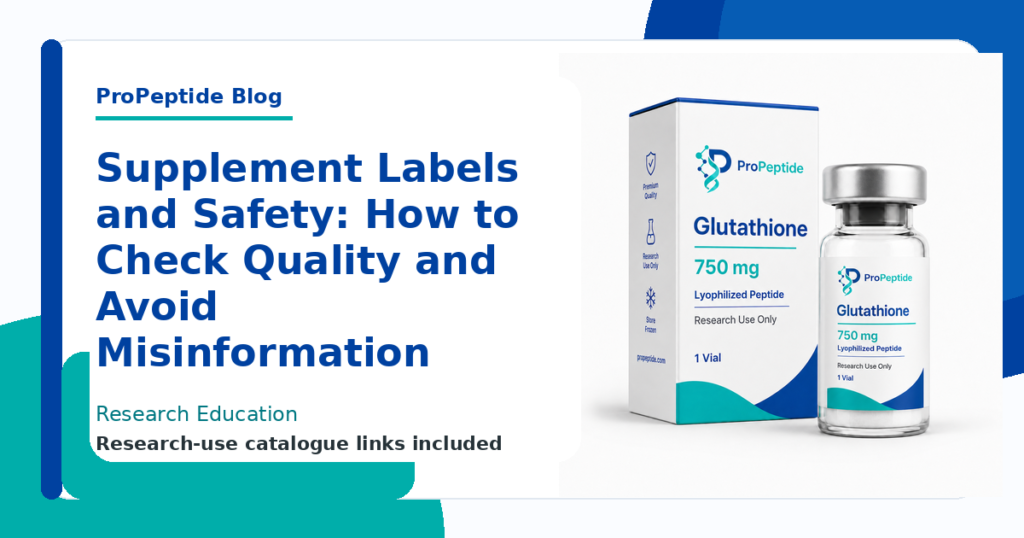
A label can make a product look official even when the claims behind it are weak. In wellness and performance categories, confident wording often travels faster than careful evidence.
Learning how to read labels, intended-use statements, and safety resources is one of the best ways to avoid misinformation. It is written for general education and should not replace personal advice from a qualified health professional.
Important note: ProPeptide catalogue items mentioned in this article are listed for research use only. They are not dietary supplements, medicines, cosmetic products, or products for human or veterinary use. Any product links are included for website navigation and research-catalogue context only.
Health trends change quickly, but the basics remain surprisingly steady. Sleep, movement, food quality, stress regulation, and medical support all influence wellbeing. Products can be part of a research conversation or a consumer conversation, but those two categories must not be blurred. Clear wording helps readers make safer decisions.
Search engines reward useful content, but readers reward clarity. A helpful health article should not promise shortcuts. It should explain the problem, show the safer first steps, and make it easy for readers to find credible sources. That is especially important in wellness categories where social media can turn early-stage research, lab products, or prescription-only topics into casual shopping language.
The goal is not to make health feel complicated. The goal is to remove the false choice between doing nothing and doing something extreme. Most people can start with a small set of repeatable actions that fit real life, then seek professional support when symptoms, injuries, sleep issues, or metabolic concerns persist.
The first foundation is sleep. Consistent sleep timing supports decision-making, appetite regulation, training quality, mood, and recovery. A busy person does not need a perfect routine, but they do need a realistic sleep opportunity. That means deciding when the workday ends, reducing late-night stimulation, and treating bedtime as part of tomorrow’s performance.
The second foundation is movement. For office workers, breaking up sitting time can be as valuable as planning formal workouts. For gym-goers, movement includes warm-ups, mobility work, walking, and active recovery. A strong weekly plan usually combines strength training, aerobic activity, and low-intensity movement rather than relying only on intense sessions.
The third foundation is nutrition. Most people do better when meals are structured enough to prevent emergency hunger. Protein, fibre-rich carbohydrates, healthy fats, and adequate fluids are not exciting, but they are dependable. Supplement conversations are more useful after these basics are in place because it becomes easier to identify a real gap instead of buying products out of frustration.
The fourth foundation is stress management. Stress cannot always be removed, especially when work pressure is real, but it can be buffered. Short breaks, social support, breathing exercises, journaling, fewer late-night alerts, and clearer boundaries can reduce the feeling that the nervous system is always on call. When stress is severe or persistent, professional care matters.
Dietary supplements can be useful in some contexts, but they should be evaluated with evidence and safety in mind. Resources such as NIH Office of Dietary Supplements fact sheets help readers review ingredients, possible benefits, interactions, and safety considerations. For sport and gym-related decisions, NIH ODS: exercise and athletic performance supplements is a helpful starting point because it separates common ingredients from unsupported claims.
A supplement is not automatically better because it sounds scientific. A product can have a polished label and still be unsuitable for a person’s goals, medical history, medications, or sporting rules. The safest habit is to define the problem first. Is the issue poor sleep, low protein intake, too much training volume, inconsistent meals, unmanaged stress, or an actual health condition? Each answer points to a different next step.
Research peptides and laboratory materials require even more careful wording. They should not be described as ordinary wellness supplements. In Australia, official guidance from the Therapeutic Goods Administration is especially relevant for any conversation involving unapproved peptide products or therapeutic claims. That is why this blog uses research-use language for internal product references and avoids personal-use instructions.
For readers who are browsing the ProPeptide catalogue, relevant research-use only pages connected to this topic include Bacteriostatic Water 10ml, Glutathione 1500mg, and Retatrutide 10mg. These internal links help visitors move between educational content and product pages, but they should not be read as a recommendation for personal use. Each linked product page should be reviewed for its stated intended use, storage language, and research-use notice.
This distinction is good for compliance and good for user trust. A website can discuss health, performance, workload, and supplement literacy while still making it clear that laboratory catalogue items are not positioned as self-treatment products. That clarity also improves the quality of on-page SEO because the article matches search intent without making unsupported or unsafe claims.
For qualified research settings, documentation is part of quality. Keep product identity, receipt date, storage conditions, lot information if available, and internal handling notes together. This is not glamorous content, but it is the type of operational discipline that prevents confusion later. It also reinforces the boundary between research materials and consumer health products.
Choose one change for the next week and make it visible. Put it on the calendar, write it on a checklist, or share it with someone who will ask how it went. The point is not perfection; it is feedback. If the change works, keep it. If it does not, reduce the size of the step until it fits your real schedule.
Health content is most useful when it respects both ambition and safety. Busy professionals, gym-goers, and wellness-minded readers do not need more hype. They need clear priorities, credible sources, and honest product language. Start with the foundations, use external references to check claims, and treat ProPeptide product links as research-catalogue navigation only.
Most people think of time management as a productivity skill.
A heavy workload does not always look dramatic from the outside.
Find research peptides, certificate documentation, guides and key product categories in one clean menu.